
Is Your Maltipoo Overweight?

If you're wondering whether your Maltipoo’s weight is normal, you’re not alone. Because Maltipoos come from two completely different-sized parents, their weight range can be all over the place. Some stay 5 pounds forever. Some hit 20. And both can still be perfectly healthy.
Below is the complete Maltipoo weight guide. How big they get, how much they should weigh at each age, when to worry, and the signs of an overweight Maltipoo.
Average Maltipoo Weight (Overview)
A full-grown Maltipoo typically weighs between 5 and 20 pounds, depending on:
Whether their Poodle parent was a Miniature or Toy
Genetics from the Maltese side
Gender
Build (lean vs. stocky)
Lifestyle and activity level
Most fall into one of three common categories:
Teacup Maltipoo Weight
2–5 pounds full grown
Not officially recognized
More fragile, higher health risk, shouldn’t be bred intentionally
Toy Maltipoo Weight
5–10 pounds
Most common size from reputable breeders
Mini/Miniature Maltipoo Weight
10–20 pounds
Taller, longer legs, more athletic
This wide range is why “Is my Maltipoo overweight?” is one of the most common questions owners ask.
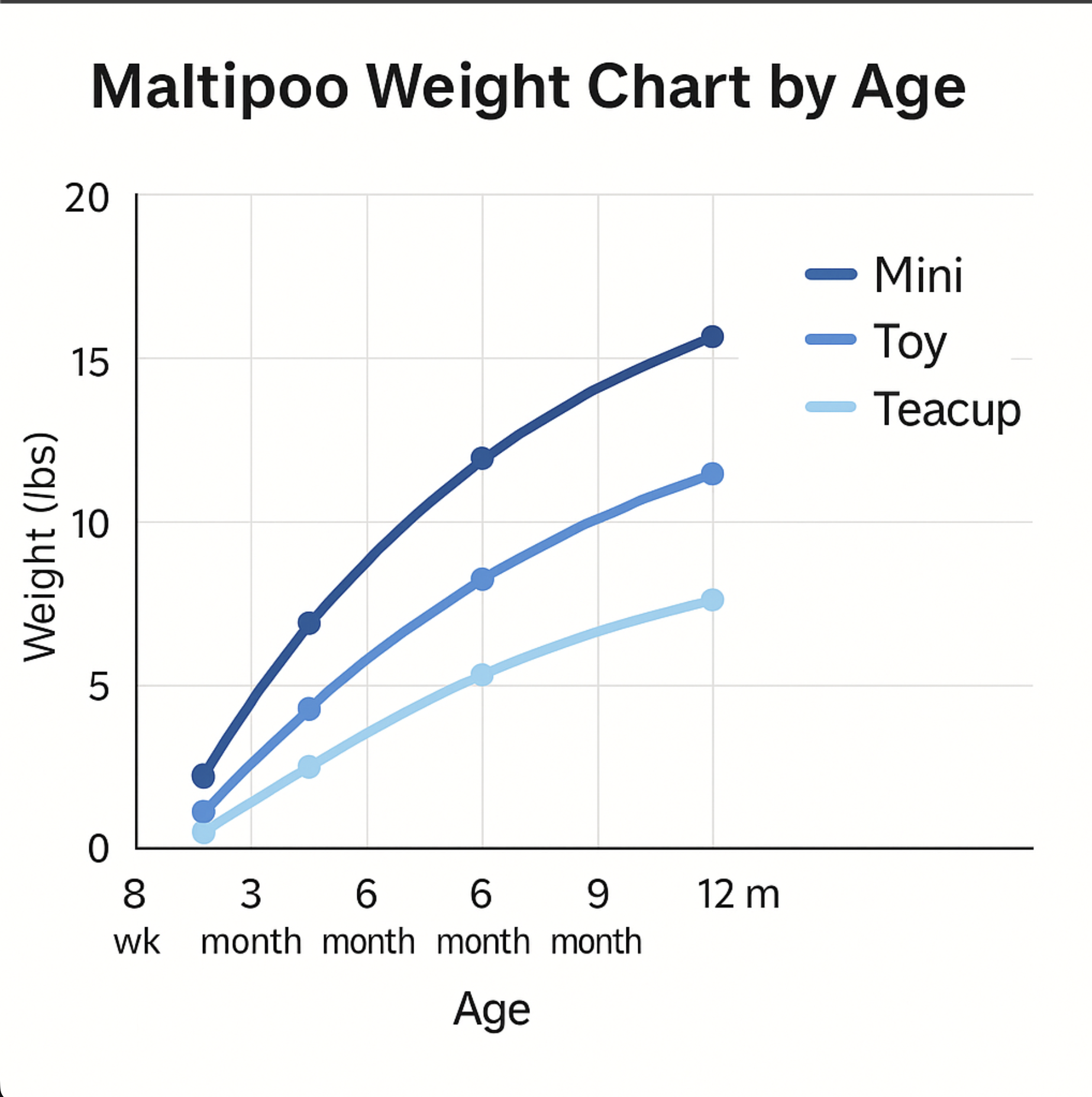
Maltipoo Weight Chart by Age
Every puppy grows differently, but these are the typical ranges:
Age / Teacup / Toy / Miniature
8 weeks 1–2 lbs / 2–3 lbs / 3–5 lbs
3 months 2–3 lbs / 3–5 lbs / 5–7 lbs
6 months 2–4 lbs / 4–7 lbs / 7–12 lbs
9 months 2–5 lbs / 5–9 lbs / 9–15 lbs
12+ months / 2–5 lbs / 5–10 lbs / 10–20 lbs
Most Maltipoos reach their full weight by 10–12 months, though minis can continue filling out until 14 months.
How Big Should Your Maltipoo Be? A Simple Body Check
Forget the number on the scale for a second. The real signs of a healthy Maltipoo weight are:
1. You should be able to feel—but not see—the ribs.
If you see ribs sticking out, they're underweight.
If you can’t feel ribs at all, they may be overweight.
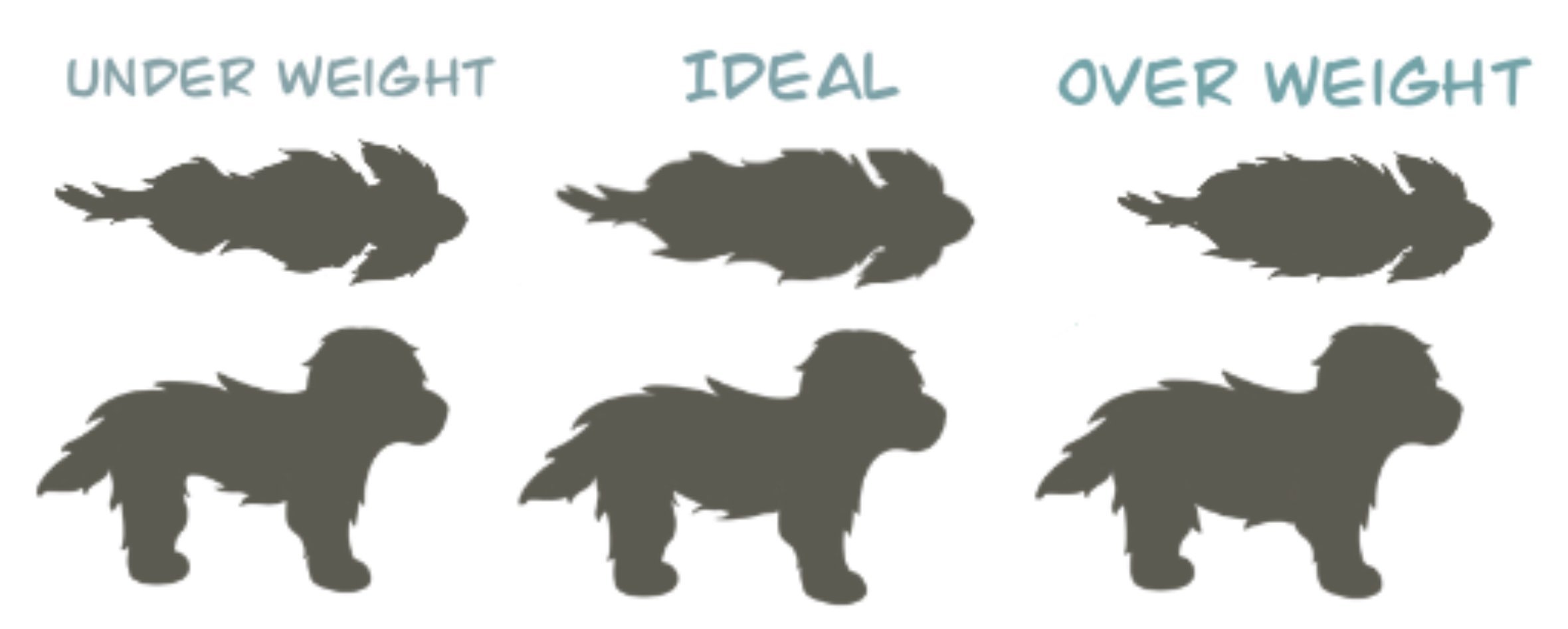
2. Look from above: they should have a slight waist.
Straight like a rectangle = overweight
Hourglass shape = ideal
Bulging midsection = overweight
3. From the side: belly should slope upward slightly.
A hanging belly pouch can indicate excess fat.
4. Energy levels matter.
Overweight Maltipoos often get tired quickly, pant more, and avoid stairs or play.
Signs Your Maltipoo Is Overweight
Here’s what you’ll start noticing first:
No visible waist when looking from above
Hard time jumping on furniture
Heavy breathing or snoring
Moving slower or needing more breaks on walks
Belly swaying slightly when they walk
Collar or harness fits tighter
If you see two or more of these, it’s time to reassess diet and activity.
Healthy Weight Depends on the Type of Poodle Parent
This is the #1 factor competitors barely mention—and this section helps you outrank them.
Toy Poodle Parent = Smaller Maltipoo
Adults usually 5–12 lbs
Compact frame
Baby-face look
Miniature Poodle Parent = Larger Maltipoo
Adults 12–20 lbs
Longer legs
Lean athletic body
Two Maltipoos can look identical—but weigh 7 pounds apart simply because their Poodle parents were different sizes.
How Much Should You Feed a Maltipoo?
Feeding mistakes are the most common cause of weight problems.
Daily Feeding Guidelines
General rule:
¼–1 cup per day depending on size:
Teacup: ¼ cup
Toy: ½ cup
Mini: ¾–1 cup
BUT this varies by brand. Always follow the calories on the bag, not just the scoop size.
Common Overfeeding Mistakes
Free feeding
Too many training treats
Feeding human food regularly
Switching foods too often
Not adjusting food for activity level
Tip: Treats should be no more than 10% of daily calories.
How Exercise Affects Your Maltipoo’s Weight
A healthy Maltipoo needs 45–60 minutes of activity per day, split into sessions.
Good activities:

Short brisk walks
Fetch
Indoor tug
Puzzle toys
Enrichment games
Signs they need more exercise:
Restlessness
Barking for attention
Weight gain despite “normal” feeding
Chewing out of boredom
Maltipoo Weight & Genetics (Why Some Are Just Naturally Bigger)
Even within the same litter, Maltipoo puppies can grow differently because:
Poodles vary a LOT in size
Maltese can pass down petite or sturdy genes
Puppies with longer legs naturally weigh more
Males tend to be heavier
Larger bone structure = heavier adult weight
Weight alone doesn’t determine health—structure does.
Is Your Maltipoo Underweight?
Less common, but it happens.
Signs of underweight:
Visible ribs or spine
Low muscle tone
Lethargy
Poor appetite
Dull coat
Sunken waist
Possible causes:
Parasites
Food allergies
Stress
Not eating enough calories
High metabolism
If in doubt, contact a vet and bring your feeding schedule.
When Maltipoos Stop Growing
Most Maltipoos stop growing in height around:
Toy Maltipoos: 6–8 months
Mini Maltipoos: 9–12 months
But weight may still increase gradually until one year (or slightly longer for bigger minis).
Ideal Maltipoo Weight by Height
If you know your Maltipoo’s height, you can get a better weight estimate:
Height / Normal Healthy Weight
8–10 inches / 5–9 lbs
10–12 inches / 8–14 lbs
12–14 inches / 12–20 lbs
Maltipoos taller than 14 inches typically come from a larger Miniature Poodle.
How to Help Your Maltipoo Lose Weight Safely
If your pup is a little chunky, don’t worry, small changes add up fast.
Step 1: Reduce treats
Switch to low-cal options like green beans or freeze-dried chicken.

Step 2: Add 10 more minutes of walking
Daily exercise works better than occasional long workouts.
Step 3: Check your food portions
Most owners accidentally overfeed by 20–30%.
Step 4: Switch to weight-management dog food if needed
Look for high-protein, moderate-fat kibble.
Step 5: Use slow-feeder bowls
Helps reduce overeating and indigestion.
Frequently Asked Questions About Maltipoo Weight
1. Why do some Maltipoos weigh 20 pounds?
Likely from a Miniature Poodle parent, not a Toy. It’s completely normal.
2. Is 15 pounds overweight for a Maltipoo?
Not necessarily. Many healthy Minis weigh 15–20 lbs.
3. What age can I tell their adult size?
By 6 months, you can estimate with 80–90% accuracy.
4. Why is my Maltipoo gaining weight suddenly?
Common causes:
Reduced activity
Overfeeding
Too many treats
Spaying/neutering slowdown
Hypothyroidism (rare but possible)
5. How often should I weigh my Maltipoo?
Once per month is perfect.
Final Thoughts: What Healthy Maltipoo Weight Really Looks Like
Healthy Maltipoos come in all shapes and sizes—tiny 5-pound pups to athletic 20-pound minis. Your dog’s ideal weight depends on their genetics, body structure, and lifestyle, not just a number on the scale.
As long as they have:
A visible waist
Ribs you can feel but not see
Good energy
No breathing issues
—they’re right where they should be.
If you’re ever unsure, take a quick photo and compare their body shape to the chart in this guide—or ask your vet for a personalized check.
